Legacy systems often sit at the centre of critical business operations, but over time they become harder to change, more expensive to support and less capable of meeting modern business needs.
Legacy system modernisation gives organisations a way to improve performance, reduce operational risk, strengthen security and support future growth without discarding the business value built into existing platforms.
The challenge is not simply deciding whether an old system needs replacing. It is choosing the right intervention. Some legacy systems need stabilising or replatforming. Others require targeted refactoring, gradual component replacement or a complete new platform.
The correct approach depends on the system’s business value, technical condition, integrations, data, security exposure and the organisation’s tolerance for disruption.
This guide explains what makes a system legacy, the main legacy modernisation strategies, the risks to manage and the best practices that help organisations modernise legacy systems without putting critical operations at risk.
What Is Legacy System Modernisation?
Legacy system modernisation is the process of improving, migrating, restructuring or replacing an existing system so that it can support current and future business requirements.
Modernisation may involve:
- Updating unsupported software or infrastructure
- Improving code quality and system architecture
- Replacing fragile integrations with APIs
- Moving workloads to more appropriate infrastructure
- Automating manual operational processes
- Improving security, observability and resilience
- Replacing individual components or the complete platform
A system is not automatically legacy because it is old. A stable system that continues to meet business needs may not require major intervention.
A system becomes a legacy problem when it creates material constraints. For example, when it:
- Cannot be changed safely or quickly
- Depends on unsupported technology
- Requires scarce or highly specialised skills
- Cannot integrate with newer services
- Creates recurring incidents or security exposure
- Consumes disproportionate maintenance effort
- Prevents the organisation from launching new products or services
A successful legacy system modernisation programme should therefore do more than introduce newer technology. It should reduce the cost, risk or operational constraint that justified the investment in the first place.

Why Legacy System Modernisation Matters
Legacy systems rarely fail all at once. More often, they create a gradual accumulation of cost, delay and risk.
Releases take longer. Integrations become harder. Senior engineers spend more time maintaining fragile services. Manual workarounds multiply and incidents become accepted as part of normal operations.
The case for legacy modernisation normally comes from one or more of the following business pressures.
| Modernisation driver | Business impact |
|---|---|
| Operational instability | Repeated incidents, downtime, manual intervention and slow recovery |
| Unsupported technology | Greater security, compliance and supplier risk |
| Slow software delivery | Delayed products, services, efficiencies and revenue |
| Integration constraints | Duplicated work, manual data movement and blocked automation |
| Scarce skills | High support costs, key-person dependency and slow onboarding |
| Poor user experience | Customer frustration, employee workarounds and avoidable service costs |
| Data limitations | Weak reporting, fragmented records and difficulty supporting analytics or AI |
Modernisation can improve security, maintainability, scalability and time to market. But those benefits should be tied to measurable business outcomes rather than treated as generic reasons to replace technology.
Organisations building the financial case should also calculate the cost of incidents, delayed initiatives, scarce skills, infrastructure waste and unmanaged risk. Read how CTOs can calculate the financial cost of legacy systems.
Why Legacy Systems Create Risk for UK Regulated Organisations
For UK regulated organisations, legacy systems are not only a technology problem. They can become an operational resilience, compliance and transformation risk.
Financial services firms are expected to understand the services that matter most, set impact tolerances and remain within those tolerances during disruption. A fragile legacy estate makes that harder because dependencies are often poorly documented, recovery processes are manual and change can introduce unexpected failure.
The same issue appears in public sector and critical-service environments. Legacy systems often hold important data, support high-volume citizen or customer journeys and depend on ageing infrastructure, scarce skills or long-standing supplier arrangements. This creates risk when organisations need to modernise, integrate new services, improve cyber resilience or adopt AI.
Modernisation should therefore be treated as a risk-reduction programme, not simply a technology upgrade. The objective is to protect critical services while improving the organisation’s ability to change safely.
| Legacy system risk | How it shows up | Why it matters |
|---|---|---|
| Operational resilience risk | Critical services depend on systems that are difficult to recover, test or change. | Disruption can affect customers, citizens, compliance obligations and revenue. |
| Security risk | Unsupported components, weak monitoring or limited patching increase exposure. | Security teams may be forced to protect systems that cannot be remediated quickly. |
| Data risk | Important data is fragmented, duplicated or trapped in formats that are hard to reuse. | Reporting, analytics, AI and customer service all suffer. |
| Change risk | Releases are slow because dependencies are unclear and testing is limited. | Business change becomes slower, more expensive and harder to govern. |
| Supplier risk | Support depends on a small number of vendors, contractors or internal specialists. | Knowledge loss or supplier failure can become a material operational issue. |
How Do You Know When a Legacy System Needs Modernising?
Age alone is not a sufficient reason to modernise a system. The decision should be based on the operational, commercial and technical constraints it creates.
Common warning signs include:
- Release cycles are becoming longer or less predictable.
- Incidents and manual interventions are increasing.
- Core vendors, frameworks or components are no longer supported.
- Integration work consumes more effort than developing new capabilities.
- Critical knowledge is concentrated in a small number of people.
- Security fixes require disproportionate time or risk.
- The system cannot support new products, channels, data or AI initiatives.
- Infrastructure, licensing or specialist support costs continue to rise.
- Employees depend on spreadsheets, rekeying and manual workarounds.
- Customer experience is being restricted by the platform.
No single sign automatically justifies replacement. Several together indicate that maintaining the status quo may now carry more risk than controlled modernisation.
Best Practices for Legacy System Modernisation
Successful legacy modernisation begins with diagnosis rather than technology selection.
Before choosing a cloud platform, replacement product or new architecture, establish what the existing system does, which business capabilities depend on it, where the real constraints lie and what outcome the organisation needs from change.
The following process reduces the risk of committing to a large migration or replacement programme before the most important assumptions have been tested.
Assess Your Current Legacy System and Map the Value Chain
Begin by assessing both the technical system and the business processes it supports.
A legacy system assessment should examine:
- Business criticality: Which products, services, users and revenue streams depend on it?
- Technical condition: How maintainable, testable, observable and resilient is the system?
- Architecture: Which components are tightly coupled and where can change be isolated?
- Data: What data is stored, how reliable is it and which systems depend on it?
- Integrations: Which internal and external services exchange information with the platform?
- Security and compliance: Are components supported, controls effective and audit trails adequate?
- Operational performance: How often does the system fail and how much effort is required to operate it?
- Skills and suppliers: Who understands the system and where does dependency exist?
- Cost: What does the system cost to host, license, maintain and work around?
- Future demand: Which planned capabilities can the current system not support?
The assessment should produce a dependency map, risk view and set of evidence-based options—not simply a list of technical defects.
Where the condition or future value of the estate is unclear, a Modernisation Readiness Review can establish what to retain, improve, replace or retire before a major investment decision is made.
Selecting a Legacy System Modernisation Strategy
There is no single correct legacy system modernisation strategy. Different parts of the same estate may require different approaches.
A practical strategy set includes the following options.
1. Retain
Keep the system largely as it is when it remains stable, secure and valuable, and when the cost or risk of change exceeds the likely benefit.
Retention should be a deliberate decision with continued monitoring—not an indefinite delay caused by uncertainty.
2. Retire
Remove systems, features or data that are no longer required.
Retirement can reduce licensing, hosting, support and security overhead without introducing a replacement system.
3. Rehost
Move the application to different infrastructure with minimal changes to its code or architecture.
Rehosting can address infrastructure, hosting or data-centre constraints, but it rarely removes architectural technical debt.
4. Replatform
Move the system to a different runtime, database, managed service or operating platform while making limited application changes.
This can improve supportability and operations without the cost of a complete rebuild.
5. Refactor
Improve parts of the codebase, integrations or technical structure while retaining the system’s core functionality.
Refactoring is appropriate when the system still has strong business value but specific areas are difficult to change, test or scale.
6. Rearchitect
Redesign significant parts of the system to remove structural constraints.
This may involve separating tightly coupled components, introducing clearer service boundaries, replacing batch processes or creating APIs around core capabilities.
7. Replace
Move to a new bespoke or commercial system when the existing platform can no longer support the organisation’s operational or strategic requirements.
Replacement carries greater delivery, data and adoption risk. It should normally be phased and supported by evidence rather than treated as a single big-bang programme.
Additional risk-reduction approaches
Organisations do not always need to choose between leaving the system untouched and replacing it completely.
Other practical options include:
- Stabilise first: Reduce incidents and improve observability before beginning structural change.
- Wrap with APIs: Provide controlled access to legacy capabilities without changing the entire core system.
- Incremental replacement: Replace components or business capabilities in stages.
- Minimum Viable Replacement: Build the smallest viable alternative that proves the replacement route before committing to the full scope.
Which Legacy Modernisation Approach Should You Choose?
| Current condition | Likely approach | Main consideration |
|---|---|---|
| Stable system with low change demand | Retain | Continue monitoring risk, support and future demand |
| Duplicate or low-value capability | Retire | Confirm data, regulatory and user dependencies first |
| Main problem is ageing infrastructure | Rehost or replatform | Do not expect infrastructure change to remove application debt |
| Valuable system with specific brittle components | Refactor | Prioritise the components creating the greatest constraint |
| Architecture prevents scale, integration or safe change | Rearchitect | Prove the new boundaries and migration route incrementally |
| Unsupported system blocking growth or customer experience | Replace | Protect critical journeys, data and operational continuity |
| High risk but low tolerance for disruption | Stabilise, wrap and replace incrementally | Separate change into controlled phases |
| Unclear value, condition or dependencies | Assessment or Minimum Viable Replacement | Reduce uncertainty before committing to full delivery |
The strategy should be chosen according to the dominant business constraint, not according to a preferred technology or platform.
Choose the Right Architecture and Tech Stack
The target architecture should be based on the system’s workload, data, security, integration and operational requirements.
A modern technology stack is not automatically better if the organisation cannot support it or if it introduces unnecessary complexity.
Evaluate:
- Expected transaction volumes and performance requirements
- Availability and recovery needs
- Data location and regulatory constraints
- Integration patterns
- Security and identity requirements
- Deployment and testing capability
- Internal skills and operating model
- Long-term support and supplier dependency
- Total operating cost
Microservices, containers and cloud-native services may be useful, but they should not be adopted simply because they are considered modern. In some cases, a well-structured modular application will be safer and cheaper to operate than a distributed architecture.
The objective is not to maximise technical novelty. It is to create a platform the organisation can change, operate and improve reliably.
Protecting Data During Legacy System Modernisation
Data migration is often one of the highest-risk parts of legacy system modernisation.
The difficulty is rarely limited to moving records from one database to another. Legacy data may contain:
- Duplicate or incomplete records
- Inconsistent formats and definitions
- Undocumented transformations
- Historical exceptions embedded in operational processes
- Dependencies that are not visible in the application code
- Retention, privacy or audit requirements
A data migration plan should define:
- Which data must be migrated, retained, archived or deleted.
- How source and target data models correspond.
- Which quality rules must be met.
- How migration scripts will be tested repeatedly.
- How records will be reconciled after migration.
- How access, audit and regulatory controls will be preserved.
- What rollback or recovery process will be used if validation fails.
Where practical, build repeatable extraction, transformation and loading processes into an automated delivery pipeline. This allows migration to be rehearsed, tested and corrected before the final transition.
For critical systems, running old and new capabilities in parallel may reduce risk. However, parallel operation also creates synchronisation and support overhead, so it should have a defined end date and retirement plan.
Why Legacy Systems Block AI Readiness
Legacy systems often become a constraint on AI because they make data difficult to access, trust and govern. Data may be spread across old databases, manual processes, spreadsheets, scanned records or undocumented integrations. Before AI can create reliable value, organisations need to understand which data matters, where it sits, who owns it and whether it can be used safely.
This does not mean every legacy system must be replaced before AI can progress. It means AI use cases should be assessed against the systems and data they depend on. If those foundations are weak, the first modernisation priority may be data access, integration, governance or observability rather than a full rebuild.
Minimise Disruption and Plan for Future Upgrades
Legacy systems often support critical services, so modernisation must protect operational continuity.
Reduce disruption by:
- Prioritising critical business journeys
- Separating the programme into controlled phases
- Testing high-risk assumptions before scaling delivery
- Introducing automated testing and deployment
- Using feature flags or staged releases where appropriate
- Running old and new capabilities in parallel where the risk justifies it
- Defining rollback and recovery procedures
- Training users and operational teams before transition
- Monitoring the new system before retiring the old one
A retirement plan should define the conditions that must be met before the legacy system can be switched off. These may include successful data reconciliation, operational stability, completion of critical user journeys and confirmation that no remaining service depends on the old platform.
Modernisation should also improve the organisation’s ability to make future changes. Without better testing, deployment, monitoring and ownership, the replacement platform will eventually accumulate the same constraints as the system it replaced.
A Phased Legacy System Modernisation Roadmap
- Define the business outcome.Agree which operational, customer, risk or growth constraint the programme must remove.
- Assess the system and dependencies.Map applications, data, integrations, users, suppliers, risks and operational processes.
- Quantify the cost and risk of doing nothing.Estimate incidents, manual effort, delayed delivery, infrastructure waste and unmanaged exposure.
- Select the modernisation approach.Compare retaining, retiring, rehosting, replatforming, refactoring, rearchitecting and replacing.
- Test the highest-risk assumptions.Use discovery, prototypes or proofs of concept to validate architecture, integration and migration decisions.
- Design the data and transition plan.Define migration, reconciliation, security, parallel operation and rollback requirements.
- Deliver incrementally.Prioritise components or journeys that reduce the greatest risk or unlock the greatest value.
- Measure outcomes.Track reliability, delivery speed, operating cost, adoption and the business outcome that justified the work.
- Retire the legacy system safely.Remove old infrastructure, licences, integrations and access only when operational and data requirements have been met.
The roadmap should create measurable progress early rather than delaying all value until a final replacement launch.
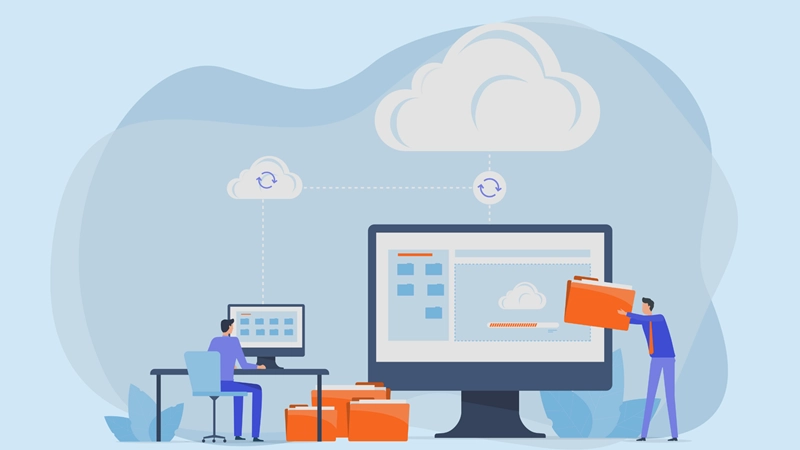
Why Cloud Is Often Part of Legacy System Modernisation
Cloud migration is frequently part of legacy modernisation, but moving a system to the cloud is not the same as modernising it.
Cloud services can improve scalability, automation, observability, resilience and access to managed infrastructure. They can also reduce dependency on ageing hardware and manual environment management.
However, moving a brittle application to cloud infrastructure can preserve the same:
- Fragile code
- Tightly coupled architecture
- Poor integrations
- Manual processes
- Security weaknesses
- High operating costs
| Cloud can help when | Cloud alone will not solve |
|---|---|
| Infrastructure is ageing or difficult to scale | Poor application architecture |
| Managed services can remove operational effort | Unclear business processes |
| Automation can improve deployment and recovery | Low-quality or inconsistent data |
| Demand varies significantly | Unsupported application components |
| The organisation can govern cloud cost and security effectively | Weak engineering and delivery practices |
The choice between cloud, on-premises and hybrid infrastructure should be based on workload, security, regulation, performance, cost and operating capability.
Cloud should be treated as an enabler within the modernisation strategy, not as the strategy itself.
Common Legacy Modernisation Mistakes
Starting with a preferred technology
Choosing a cloud platform, commercial product or target architecture before understanding the problem can lock the programme into the wrong solution.
Assuming everything must be replaced
Legacy estates often contain valuable data, rules and capabilities. Reuse, wrapping and incremental replacement may be safer than a complete rebuild.
Underestimating dependencies
Critical dependencies are often found in integrations, operational processes, spreadsheets, scheduled jobs and employee knowledge—not only in the source code.
Treating data migration as a final-stage task
Data quality, mapping and reconciliation should be tested early. Discovering migration problems near launch creates delay and operational risk.
Using a big-bang transition
Replacing a critical system in one release concentrates technical, operational and adoption risk into a single event.
Recreating the legacy system feature for feature
Some legacy functionality exists because of old constraints or outdated processes. Replicating everything can transfer unnecessary complexity into the new platform.
Failing to plan retirement
Without a clear decommissioning plan, organisations can end up operating both systems indefinitely and paying for duplicated infrastructure, licences and support.
What Successful Legacy Modernisation Looks Like
The UK Ship Register modernisation demonstrates why legacy transformation must address technology, data, operations and user experience together.
The existing service relied on paper forms, manual data entry, fragmented workflows and an earlier failed data migration. Catapult designed and delivered a digital platform supported by automated data migration, integrated government services, continuous delivery and a cloud-native architecture.
The results included:
- 89% fewer data and certification errors
- 625% more monthly transactions
- 45% lower cost per transaction
- Registration processing reduced from more than 60 minutes to 8–17 minutes
- Digital certificates issued in seconds rather than 15 minutes
The programme did not modernise the technology in isolation. It redesigned the service, improved data quality and removed manual operational constraints.
Read the full UK Ship Register modernisation case study.
Need Help Choosing the Right Modernisation Path?
The wrong modernisation strategy can move technical debt rather than remove it.
Catapult helps organisations assess legacy systems, test replacement options and deliver controlled modernisation without unnecessary disruption.
Depending on the system and business need, that may involve:
- Stabilising a critical platform
- Wrapping legacy capabilities with modern APIs
- Refactoring or rearchitecting constrained components
- Designing a Minimum Viable Replacement
- Migrating data and integrations
- Replacing the system incrementally
Explore Catapult’s legacy system modernisation services, book a Modernisation Readiness Review or talk to us about your legacy estate.
Legacy System Modernisation FAQ
What is legacy system modernisation?
Legacy system modernisation is the process of improving, replacing or replatforming older systems so they can better support current business needs. That can include upgrading infrastructure, moving to the cloud, redesigning integrations, improving security, or rebuilding parts of the application. The goal is not change for its own sake. It is to reduce risk, improve performance, and give the business a platform it can actually evolve.
What are the main legacy system modernisation strategies?
The main strategies are to retain, retire, rehost, replatform, refactor, rearchitect or replace the system. Organisations can also stabilise a system, wrap it with APIs or replace components incrementally to reduce risk.
When should a business modernise a legacy system?
A business should consider modernisation when a legacy system starts slowing delivery, creating operational risk, increasing support costs, or limiting integration with newer tools and services. Other common signs include poor scalability, growing security concerns, difficulty finding people with the right skills, and heavy reliance on manual workarounds. If the system is holding back customer experience, compliance, or growth, it is already a modernisation problem.
Should you modernise, migrate or replace a legacy system?
The right choice depends on the system’s business value, technical condition and dominant constraint.
Modernise or refactor when the system remains valuable but is difficult to change, integrate or scale. Migrate or replatform when the main issue is infrastructure, hosting or platform support. Replace when the system can no longer support critical business, security or customer requirements.
Some systems should simply be retained or retired. An assessment should compare the cost, risk, disruption and long-term value of each option before a full replacement is approved.
What are the main risks in legacy system modernisation?
The biggest risks are usually data loss, disruption to business operations, unexpected complexity, and underestimating dependencies between systems. Poor planning can also lead to cost overruns, delays, security gaps and low user adoption. These risks can be reduced with a clear strategy, phased delivery, strong data migration controls, realistic testing, and a rollout plan that protects business continuity.
Can you modernise legacy systems without disrupting the business?
Yes, but only if the work is planned properly. Many organisations take a phased approach, modernising components in stages rather than trying to replace everything at once. Running old and new systems in parallel for a period, testing migrations thoroughly, and prioritising critical business journeys all help reduce disruption. The aim should be controlled change, not a high-risk big-bang launch.
How long does legacy system modernisation take?
There is no fixed timeline. A focused piece of modernisation can take weeks, while a larger transformation programme can take months or longer depending on the system, the data, the integrations and the level of change involved. The fastest route is not always the safest. A good programme should move at the speed the organisation can absorb, while still delivering measurable progress early.
Is cloud migration always part of legacy system modernisation?
Not always, but it is often part of the solution. Moving to the cloud can improve scalability, resilience, security and cost control, but it is not automatically the right answer for every system. Some organisations need hybrid models, and others need to modernise the application architecture before cloud migration will deliver real value. Cloud should be treated as an enabler, not the strategy itself.